
One of the harmless games currently doing the rounds at Bluesky is asking people to pick their top five albums, or what their top five albums were when they turned eighteen. My initial reaction was (a) that’s a BIG question to ask and (b) why stop at five, or does that number discipline your thinking? But yes, don’t even think about it, just be honest and write them down, the five which meant most to you at that important time in your life.
I haven’t participated in that game myself because (a) I don’t have a ready answer and can’t possibly stop at fifty, let alone five; and (b) in a lot of the responses I’ve read thus far there seems to be a certain element of hindsight, projection and hipper-than-thouness going on. Really, don’t kid us on that you sneaked out in the school break and picked up twelve-inch singles by ESG on import. You didn’t get that much pocket money for a start. No, it’s much more likely you bought “Dead Ringer For Love” or maybe “Arthur’s Theme” out of the ex-chart singles 50p bin at Woolworths. I reiterate; just be honest. You’re not at school any more and we’re not going to make you stand in the cool corner all afternoon because you gave the “wrong” answers. I bought “Arthur’s Theme” just after my eighteenth birthday. It’s a great pop single, as Danny Baker in the NME of the time confirmed.
So I’m not going to render anyone prematurely weary with pseudo-hipster jive about being breastfed on AMM or something. The first song I remember hearing and memorising was “Let’s Go Fly A Kite” from Mary Poppins which I watched with my parents in the George Cinema, Bellshill, on the afternoon of Saturday 10 December 1964. I was about ten-and-a-half months old. Funny the things one remembers. What did I do last Thursday? Um, might have to get back to you on that one…
I turned eighteen on 25 January 1982. I was in my first proper year at university and busy weaning myself off hardcore no-girlfriends free jazz and onto pop. This was made especially easy for me by the aforementioned NME, whose writers were keen to tell us that these were all pieces of the same mighty musical jigsaw puzzle. Dollar or Defunkt (you should have heard my DJ segue from “Mirror Mirror (Mon Amour)” into “The Razor’s Edge”), Art Ensemble of Chicago or ABC…it all fit, which was fine by me.
At the time, mainstream pop music a.k.a. what got into the top forty was in the midst of its finest year (July 1981-June 1982), bracketed by Stars On 45 and Fame, and I was not unaware of that. In fact I celebrated it. Who would have thought even in January 1982 that a bunch of presumed complete musical outliers like the Associates were less than two months away from getting into the top ten? Everything seemed open. The 12-inch of “I Could Be Happy” was as captivating as the introduction to “Waiting For A Girl Like You.”
If we were talking singles rather than albums, therefore, I could go on a lot longer than the number five. But my favourite albums of the period, and how did they overlap with the albums which I played most during that period? It’s easy to get the two confused because they are two very different things. Quite often your favourite albums don’t need to get played all the time. In contrast there were albums which I spun to buggery at the time and about which I remain deeply affectionate in a “hello old friend” way, because as David Stubbs said in his Unknown Pleasures piece on The Lexicon Of Love, music means more to you when you’re nineteen than when you’re nine or twenty-nine.
Well, LoL didn’t get released until the last week of June 1982, and would without question be in my top five had it come out five months earlier (but even the single of “Poison Arrow” wasn’t quite ready to roll yet). So all I can really offer is an undisciplined mixture of albums I knew even then to be among my favourites and those which I couldn’t stop playing in my hall of residence (or “rooms” if you must). These are absolutely, without even pausing to think, the albums which meant most to just-turned-eighteen me. Interpret that phrase as you will because you don’t pay my wages.
Escalator Over The Hill by Carla Bley and Paul Haines

What a predictable opener. It became my favourite album ever when first I heard it on headphones at the Bridge Street Library in what was then the wreckage of the Gorbals on Saturday 16 February 1980, and how anguished was I to discover that the British release on Virgin Records had gone out of print in…October 1979! Well, ECM very obligingly reissued EOTH in its original triple-album-plus-book-box set format in December 1981 and you’d best believe that I became hooked on it all over again. In the setting of what was then not quite codified “New Pop,” its anti-sense made even more sense. When I was in Reckless Records in Soho this Saturday just past, the CD edition was going for £17. I put it at the front of that particular rack because it’s important that another sixteen-year-old finds this masterpiece – still my favourite album, at the time of writing the undefeated champion for over 36½ years - and gets their life potentially changed by it.
Rock Bottom/Ruth Is Stranger Than Richard by Robert Wyatt
![Robert Wyatt – Rock Bottom / Ruth Is Stranger Than Richard – 2 x Vinyl (CBS Pressing, Gatefold, LP, Album + 3 more), 1983 [r19522678] | Discogs](https://i.discogs.com/fgxrm-iV7YMZ-QJZ7Ilhn50c0wn2qhzM02eJ2_60pCY/rs:fit/g:sm/q:40/h:300/w:300/czM6Ly9kaXNjb2dz/LWRhdGFiYXNlLWlt/YWdlcy9SLTE5NTIy/Njc4LTE2MjY1MDU4/MjItNTQ5NS5qcGVn.jpeg)
God bless the smaller Bloggs record shop on the other side of Renfield Street in Glasgow, where I picked up this extremely handy twofer reissue, probably circa April 1980. The two albums go together so well that they manufacture a self-contained world entirely of their own, and the music on them to this day sounds like nothing else ever made – except, in several places, Escalator Over The Hill (no wonder Carla B loved it and went on to work with Robert); not Canterbury rock, not free jazz, not folk, not psychedelia…just sui generis genius. And it was decades before I realised that Rock Bottom wasn’t about what I lazily assumed it was about. It didn’t matter; all that mattered was that it mattered to me.
Fire Escape In The Sky: The Godlike Genius Of Scott Walker

I knew nothing about Scott Walker in 1981 apart from “Joanna,” “The Sun Ain’t Gonna Shine Any More” and “No Regrets.” On the other hand The Teardrop Explodes were my favourite band of the period and if Julian Cope himself had assembled this compilation of his late sixties and very early seventies work – I didn’t know which was which; there were no laboriously explanatory sleeve notes, personnel details or discographies, just a dozen songs which you had to absorb on their own merits.
I bought Fire Escape because I heard Richard Skinner play “Such A Small Love” on Radio 1. This sounded like the absolute epic JC was going on about. And it just sounded like…nothing else, not even Engelbert. It captivated the entire hall of residence when I played it and I don’t know how many times I taped it for others. Some of my peers thought Scott had died tragically some years ago. Not the case, I said; he just seems to keep to himself.
At Christmas 1981 I was back home in Glasgow – in fact it was the same Saturday afternoon when I picked up the EOTH reissue at James Kerr’s great jazz shop on Woodlands Road – when I saw Nite Flights going for 99p in the bargain bin at the Virgin Megastore on the corner of Union Street. That shop had opened just over a year before and I speedily availed myself of it. I remember the gentlemen at the counter cackling over the first album by Chris McGregor’s Brotherhood of Breath on RCA Neon from 1971, which was selling for £1.99. That cover – stupid old hippies hahaha. Just over thirty years later, Lena and I were living in the street where that cover photo was taken. I bet they NEVER listened to the record itself.
Anyway, Nite Flights, which everyone had talked about, including apparently Bowie, Eno and Midge Ure, but nobody had actually bought in 1978. I’d never heard it myself. Its first four tracks, all composed by Scott, sounded like music from an alternate universe, unmoored and unbothered by gravity. “The Electrician” – which had been released as a single (!!!) – sounded like the end of everything. Bloody hell (literally).
The rest of the album, written by the other two Walker brothers, was fucking awful and no wonder it didn’t sell. But those initial four Scott songs – it was akin to Ian Curtis’ grandfather shuffling in the next world.
In January 1982 Phonogram put out a compilation of Scott singing Jacques Brel songs. Overall it sounded like Harry Secombe and Ken Dodd having a seizure in Benny Hill’s back garden but nobody has done “If You Go Away” better, even if at several points Scott sounds like he’s taking the sardonic piss out of the song.
Kilimanjaro and Wilder by The Teardrop Explodes

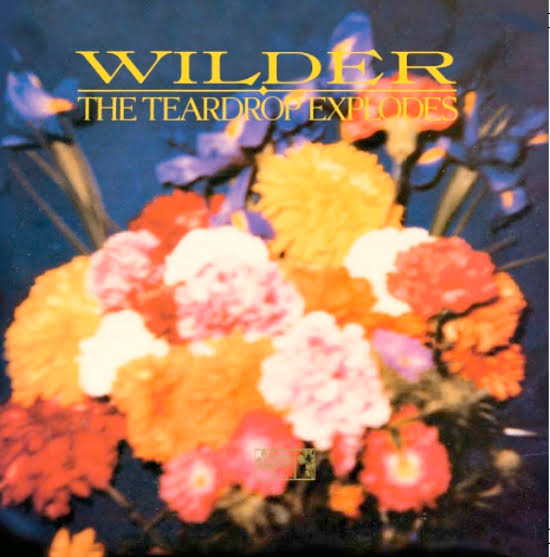
The Teardrops, as I’ve already intimated, were my top band in ’81 going into ’82. The Bunnymen still seemed slightly at one remove; I perceived Heaven Up Here’s greatness but had to work a bit harder in order to “get” it (no bad thing). By Kilimanjaro I mean the reissue with the zebras and titular mountain on the cover and “Reward” shoved in after “Second Head.” That was the album I knew and loved and the hit single sounded perfectly natural in this new context. Hit after hit after hit. An entire song based on Clem Burke’s drum outro to Blondie’s “Denis” (“Bouncing Babies”; R.I.P. Gary Dwyer). The full version of “When I Dream” sounded like the most psychedelic thing since the coda of “Pleasant Valley Sunday.”
Then came the second album in that month of months November 1981. Some were already comparing it to Forever Changes. A fellow student played the latter to me at the time but I didn’t really get it. That had to wait until 1987 when the album was properly reissued and I finally and properly absorbed it.
But Wilder also sounded like rock music from a different planet, different even from the single “Passionate Friends” with all its cheeky quotes and references. On the inner sleeve there were even lyrics that weren’t sung, just like Escalator. Side two in particular blew Mark T (the aforementioned “fellow student”) and my minds completely. “Tiny Children” sounded like a ten-year-old Ian Curtis singing on The Sooty Show which the closing segue of “Atmosphere” string synthesiser, booming drums and sleigh bells turned into a memorial (so many musicians were still in mourning for IC at that time). By the time “The Great Dominions” ended, we were exhausted. A ten-second pause, a collective low breath of “fucking hell.” The record didn’t sell because it came out too late in the year, gun-jumping critics didn’t like it and also Julian wasn’t Simon le Bon and seemingly remained confused about whether he wanted to be Julian Cope or Kevin Stapleton. But time has, I think, proved us right about Wilder’s damaged brilliance.
Was (Not Was) by Was (Not Was)

Ah, Ze Records, which at this point in time the music press worshipped but nobody else gave a toss about. I was ambivalent. I didn’t get Fresh Fruit In Foreign Places at all (I quite liked “I Stand Accused” but could not see what everyone was going on about with Kid Creole). Two tracks on the Mutant Disco compilation – its first and last – were genius but the other four humdrum. There was a Christmas compilation in December 1981 which had “Christmas Wrapping” by the Waitresses and, more importantly for me, “Things Fall Apart” by Cristina, on it.
I just kept thinking “Carla Bley disco” with that latter track and also with “Wheel Me Out,” the final track on Mutant Disco which was done by Was (Not Was). In the summer of 1981 Paul Morley raved on about their debut album in the NME, comparing it to a pop Escalator Over The Hill, and that was quite enough for me to pick it up and go absolutely crazy over it. An indisputable and almost unheard masterpiece from start to finish and the Weiss (not Was) brothers never did anything as good as it again. “Can we deny that the ship of state is somewhat out of control?” Not any more, certainly not in 2026 (“Can…we…deny…control?”). The first album into which I really got after my father died (on the morning of Wednesday 15 July 1981, eleven days after his fiftieth birthday).
Architecture And Morality by Orchestral Manoeuvres In The Dark
This Is The Ice Age by Martha and The Muffins


Both released on Dindisc Records, each an indispensable companion to and echo of its other. When you move far away from home and find yourself in what is unquestionably a different and perhaps initially uncomfortable world – as I had done as a university student, with only Joyce’s Dubliners as a set text to use as emotional compass – you naturally absorb music which reflects that. Not Tin Drum by Japan, which I only properly investigated after hearing and being knocked sideways by Richard Skinner playing “Ghosts” in February 1982 (but my how “Sons Of Pioneers” in particular would have been apposite comparison) and not Movement by New Order, which arrived at an awkward time I think for everybody involved (although, with the passing of time and deepening of experience, it is now probably my favourite New Order album).
But Architecture And Morality especially seemed to me like an extended dream of a record (doesn’t “Souvenir” both look and sound like a pop record you’d dreamed into existence?). Nothing in its textures is quite real. It took me to other universes without the need for any drug. And yet it is set in the apocalyptic then of late 1981 “now” (“but none survive”), even if it reassures us with its closing Mike Oldfield tribute (Morley was sniffy about it in the NME, comparing it unfavourably to Speak & Spell, which perversely is now my favourite Depeche Mode album if you don’t count singles compilations. Different music for different moods).
Nobody really knew about This Is The Ice Age. Kid Jensen played its lead single “Women Around The World At Work” quite a lot at the time but no one bit. But it really is an extraordinary record, put together with a comparatively young Daniel Lanois; “Jets Seem Slower In London Skies” in particular prepares you almost to give the universe a slip.
Starsailor by Tim Buckley

There’s no Metal Box here because if truth be told I didn’t really listen to it properly until January 1987, when I came down with a very bad cold after stupidly spending hours sweeping away the snow and slush in what was a bitter winter. There was that, the first volume of The House Sound Of Chicago, Albert Ayler’s The Village Concerts double which I found for a quid as a cutout somewhere and Licensed To Ill by the Beastie Boys. Oh, and Music Madness by Mantronix. I got to know all of those very well from my sickbed.
Starsailor was difficult to get hold of in 1981 but there was a mail order firm (sorry, I can’t remember its name nearly forty-five years later) which advertised in the NME who had it available on import for about £6, so I sent off for it, again because I’d read Julian Cope singing the man’s praises, and as I understood things “Use Me” on the 12-inch of the hit re-recording of “Treason” was Cope “doing Buckley.” I knew about all the things Phil Minton was doing with his voice in various Mike Westbrook bands but this was just unbelievable; “Song To The Siren” and “Moulin Rouge” were light relief and on the title track multiple Buckley voices resembled Cathy Berberian drifting off in the USS Enterprise. Nobody has really caught up with this since (yes, I know, young Jeff very nearly did; if only, if only…).
GREATEST HITS TIME
Of course I played a LOT of compilations of singles because there was no better means of charting the progress of a singer or band than by going through their evolution on 45. That’s what primarily cheeses me off about any best albums list; somehow greatest hits comps “don’t count” even though they clearly represent the best work of the artist in question. What individual Beatles album in 1981 could have been better than the blue one (except possibly the red one, as you learn with age)? Anyway, the ones I particularly played were:
Singles Going Steady by Buzzcocks

Import-only at the time, and the subsequent CD upgrade which was sold to me in the Cancer Research shop at Highgate Village in 2010 or thereabouts by an incognito but extremely famous (now deceased) pop star and local resident improves on it substantially, but again this was hit after punchy hit after ambiguous hit in a better world. The B-sides on side two hit almost as hard as the As on side one. Speaking of Martin Rushent, oh I nearly forgot…
Dare by The Human League

Look, this IS effectively a greatest hits album, so shut up. This was one of the first three albums I bought as a fully-fledged/proper student, along with October by U2 (I should have passed, really – the deluxe edition is currently for sale at Reckless Records at an optimistic price of £50) and Still by Joy Division (a bit disappointed by that one).
Dare was of course the pop flipside to Heaven 17’s Penthouse And Pavement, which even in those early days I had already gathered was perhaps more admirable than likeable. But when we put the record on to listen to “The Things That Dreams Are Made Of” we were struck by how low-budget it all sounded. Two-and-a-half minutes later we were singing along to it. That’s pop music, and Dare is exemplary pop, even the slightly naff closing track which Phil Oakey didn’t want on the album at all. You know which song that was…
Once Upon A Time: The Singles by Siouxsie and The Banshees

The band was thanked in the credits to Dare and Morley did the sleeve note. A good thing this album existed because the Banshees were always far better at singles than albums and every one, particularly the ones involving John McGeoch, hits hard even today. Exhilarating, possibly perversely so.
The Best Of Blondie

Though long superseded by subsequent compilations, this one nevertheless seems to have it all, taking you from the band’s early sort-of-punk days through to the glory of “Rapture.” I usually skipped “The Tide Is High” but the rest is immaculate pop.
Fourth Drawer Down by Associates

That’s “Associates” with no definite article, like “Buzzcocks.” Once again you could only get this collection of their bi-monthly 1981 Situation 2 singles on import at the time but it continues to map out possibilities for pop that have yet to be considered. “White Car In Germany” is a lucid kiss directed towards an imminent future. “Kitchen Person” remains indescribable (tags: Barry Ryan, Michael Mantler, Dave Dee, Dozy, Beaky, Mick & Tich, Jess Yates).
HONOURABLE MENTION
White Light/White Heat by The Velvet Underground

Andrew McGurk was the one person who directly got me into pop music. It was because of him that I got the “banana” album, which in late 1979 had only just been re-released, and whoop did it bust my brain, and that in turn led me to other phenomena like Trout Mask Replica (a parallel musical world of its own). I eventually got the second Velvets album at 23rd Precinct in the summer of ’81 and it was so extreme it made their first one sound like a picnic with Max Bygraves. Wish I’d done “Sister Ray” at a school concert…
THINGS I BOUGHT FROM IMPULSE RECORDS IN HAMILTON ON THURSDAY 24 DECEMBER 1981
I can’t remember what they all were but I was trying to get a grasp on a vague “history” of this rock thing and I had a bit of spare grant money and record tokens to use up. But I know they did include:
The Beatles 1967-1970, Revolver and Sgt Pepper by The Beatles


There’s nothing like starting at the deep end. Loved the blue album and wasn’t hugely sure about the other two but come on, “Tomorrow Never Knows”…
Hot Rats by Frank Zappa

Had been meaning to get this for some time after hearing Dougie Donnelly playing “The Gumbo Variations” on Radio Clyde’s New To You. Ian Underwood and Don “Sugarcane” Harris properly freaking out.
Never Mind The Bollocks, Here’s The Sex Pistols

Another fab greatest hits album.
("Where's Non-Stop Erotic Cabaret by Soft Cell then?" Didn't buy that until February innit; see also The Ascension by Glenn Branca, Amarcord Nina Rota by Hal Wilner and various musicians and One Down by Material.)


