I notice that on today's Pick Of The Pops, Mark "Massive Tunes" Goodier will be tackling the British Top 20 hits of this week in 1968 and 1974. Usually these days the show doesn't go back beyond 1985 or thereabouts but here's an exception. Since I haven't done it for a while...WRITING ABOUT OLD HITS THAT IS; BEHAVE YOURSELVES...and am fairly confident that Radio 2 will make a dog's dinner out of two generally intriguing charts, I thought I should say several words about the songs they will - or, more likely, should be playing. Let's start with the Top 20 for the week ending 7 August 1968 (which was actually a Wednesday, so strictly Radio 2 should go with the one for 14 August, but they'll probably play this one and it's the better Top 20 anyway so there):
20. CUPID'S INSPIRATION: Yesterday Has Gone

On quite a lot of days, this is my favourite pop record ever. Little Anthony and the Imperials did their best with it, but Terry Rice-Milton, roaring like a cross between Sam Smith, Peter Finch and Levi Stubbs, and arranger Johnny Arthey really take the song into orchestral maximalist outer space. In the exceptionally unlikely event that I'm ever invited onto Desert Island Discs I think I'd do what Danny Baker did and simply pick a lot of pop records that enthralled me when I was four - a year beginning with "Everlasting Love" and culminating in "Eloise" - and "Yesterday Has Gone" might be the disc I'd saved. As with John Howard's "Look At Life," the song's all about seizing the joy and glory of living now, as opposed to in the past as most people choose, out of fear, to do. "BRING IT BACK AND END NOW!" Rice-Milton howls as the song slowly disappears after just two-and-three-quarter minutes. It does everything you'd ever want a pop record to do and thanks to long-term legal limbos about who actually owns the record - it was the only hit single on the NEMS label, and yes it was to do with the record shop in Liverpool which Brian Epstein once managed - it doesn't tend to appear on compilations and is absent from streaming, atrocious re-recordings notwithstanding. However, it is on YouTube, and if you can find the tackily-packaged 2007 3CD Sixties Power Ballads compilation, which you should be able to do relatively cheaply, the original turns up on there, right before "Eloise" (great sequencing!). Teddy Randazzo and Victoria Pike - what geniuses.
19. PIGMEAT MARKHAM: Here Comes The Judge
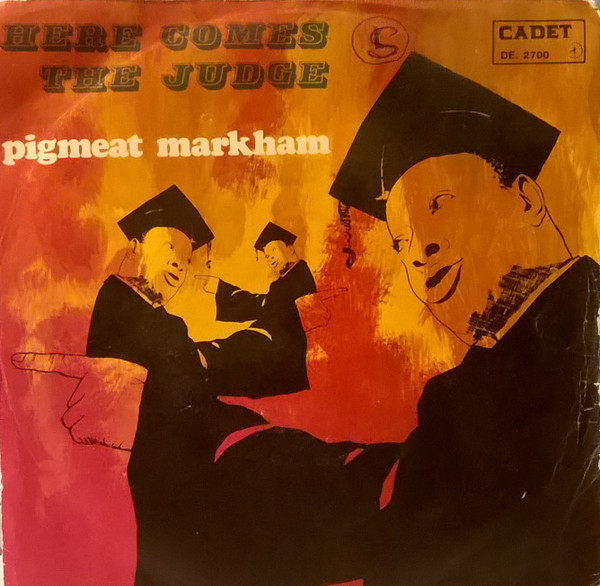
Fun and prototype rap routine, obviously inspired by Rowan and Martin's Laugh-In, though nothing to do with Shorty Long's "Here Comes The Judge" on Motown, number 32 in this same chart and a different song altogether. The strident young woman staking her claim in the first "verse" is a twenty-one-year-old Minnie Riperton.
18. THE SMALL FACES: The Universal

You would have thought the Small Faces should have been really happy in 1968, shouldn't you? A number two hit with "Lazy Sunday" and a number one album with Ogden's Nut Gone Flake. But Steve Marriott in particular was getting restless, particularly after he tried to induct newly-disllusioned reluctant teen pin-up Peter Frampton into the band without success. So "The Universal," the final official Small Faces single - Immediate subsequently released the album track "Importance Of Your Love" as a single without the consent of the band, who refused to promote it, and it barely scraped to number 36 - is Marriott's cheery fuck-you farewell, partly recorded in his back garden, complete with barking dog. Ian McLagan refused to play on the song, but there are valuable contributions from trombonist Derek Wadsworth and one Don Fay on clarinet. As with Ogden's NGF, it's a bit like The Village Green Preservation Society but stripped of any underlying dread or residual English reserve. Me and Peter are off to form Humble Pie now, ta-ra.
17. THE BEACH BOYS: Do It Again

By 1968, the Beach Boys couldn't get arrested in their homeland. Derided as square and old-hat, their records had stopped selling in the United States and they were essentially reduced to playing school gyms and sock hops. In Britain, however, they remained enormously popular - whereas Pet Sounds took thirty years to go gold in America, here it was only kept off number one by the ubiquitous Sound Of Music soundtrack - and the buoyant and openly revivalist ode to the old days "Do It Again" with a treated drum track so futuristic it was sampled decades later by Air, was lucky to get to number 20 on Billboard but here, probably helped by the fact that they were touring and promoting the record in Britain at the time it became their second number one. Listen to all of it, including the fadeout, which samples the "Workshop" section from SMiLE ("Owww!!") and even the undulating "Hey now" pattern which Hot Chip would adopt for part of "Over And Over" a lifetime later.
16. O. C. SMITH: The Son Of Hickory Holler's Tramp

Over in the States, O. C. Smith's big hit of 1968 was his original version of "Little Green Apples" (a Top 20 hit that year here for Roger Miller) but we took to this catchy uptempo footstomping ode to a mother who had to work as a prostitute just to keep her kids fed. As with Clarence Carter's "Patches," which repeated this song's number two success two years later, there's nothing British music lovers love more than A Good Story.
15. THE KINKS: Days

Not that big a hit when it came out as a single - it only peaked at number 12, as did Kirsty MacColl's 1989 cover - and its parent album The Kinks Are The Village Green Preservation Society stood no chance in the 1968 market against loud titans like Electric Ladyland, Beggars' Banquet, the White Album or indeed the first Led Zeppelin LP, its muted meditations drowned out and sidelined (not to mention Pye Records' legendary uselessness at promoting albums). This is a song of quiet fear - when Ray Davies repeatedly insists "But I'm not frightened of this world, believe me" you never really believe he is anything less than scared - about a way of life that he knows is about to become imminently extinct. It's about hiding away and reminiscing about this village green, which for all anyone knows might be The Village in The Prisoner, quiet desperation being the English way, and all that (see for balance in 1968, "Jugband Blues" by Syd Barrett).
14. BRUCE CHANNEL: Keep On

The "Hey Baby" hitmaker deletes himself from the one-hit-wonders list with this agreeable pro-sex chug. Nice use of silence in the record's arrangement, and who's blowing that tuba in the middle-eight (Howard Johnson? A.I. says there's no tuba on the song, but who trusts A.I. with anything, eh?)?
13. THE OHIO EXPRESS: Yummy Yummy Yummy

One of the many Kasenetz-Katz bubblegum smashes of the period, inexplicably covered by everyone from Peggy Lee to Pinky and Perky (did the speeded-up Mike Sammes Singers know what the song was about)?
12. SLY & THE FAMILY STONE: Dance To The Music
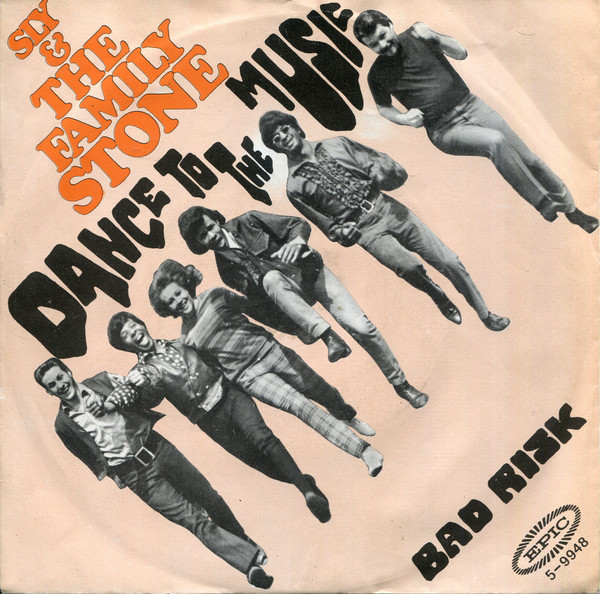
It's a bit of a shame that in Britain Sly Stone is only really remembered for one song - neither of the two 1972 Top 20 singles from There's A Riot Goin' On (although the album missed the UK charts completely) gets much play on oldies radio here - particularly as 1970's faultless Greatest Hits compilation is one of the best reasons for not killing yourself that I know of. But how glorious this still sounds, no matter how many thousands of times you've heard it - the democratic spreading out of vocals, instruments and approaches as if to say here's how human society could function if you'd only just let it. And, unlike so many records from this period, people will still dance to this music now.
11. THE EQUALS: Baby Come Back

A kind of British parallel to "Dance To The Music," and the British public's response to Enoch Powell's "rivers of blood" speech was to send this phenomenal multicultural explosion of pop to number one second time of asking - it had originally been a 1967 B-side before being flipped by a Continental DJ and cleaning up all across Europe ("RUDE boy!"). Arguably the year's most radical chart-topper.
10. HERMAN'S HERMITS: Sunshine Girl

Good old Mancunian rep reliables scoring another solid mid-table finish with this upbeat Geoff Stephens/John Carter update on the Tahiti bit of Mutiny On The Bounty (see also: Roger Whittaker's "The Last Farewell").
9. DAVE DEE, DOZY, BEAKY, MICK & TICH: Last Night In Soho
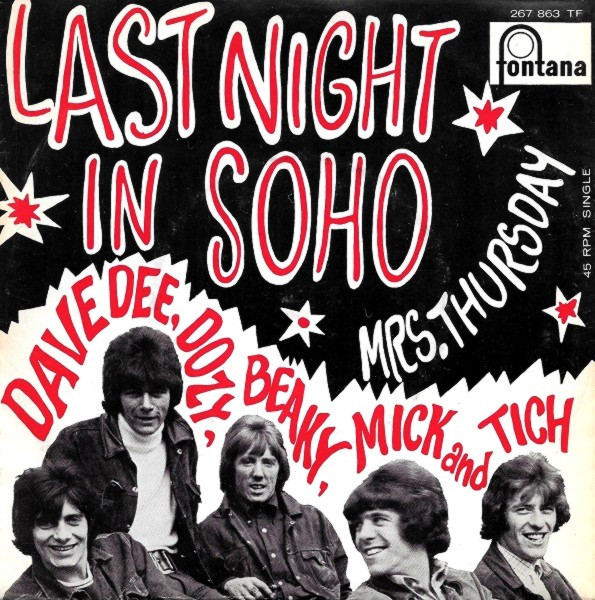
Extraordinary, even by DDBM&T's own standards - their last top ten hit and it almost sounds like the last pop record that could conceivably be made. A truly epic mashing up of post-Joe Meek melodrama - had he lived he might have produced this - Lionel Bart-style West End mucking about (the middle-eight) and apocalyptic treated two-note guitar drone which will unexpectedly reappear in Wire's "I Should Have Known Better" in 1979. Lyrically it concerns the reformed criminal who, try as he might, can't keep away from his old life and ends up paying for not doing so - although its subtext, given that both of the song's writers were gay, may well be a coded one ("I felt sure it wasn't too late/I'd find strength to make me go straight").
8. RICHARD HARRIS: MacArthur Park

I wrote a lengthy and hopefully definitive analysis of this record on one of my other blogs, as this stands as one of the absolute centres of 1968 pop as I knew and felt it. Enough to say here that this song, or songs, or elegy, calls for patience in the face of a seemingly unanswerable collapse; you have to learn to live with it and embrace rather than be put off by its intrinsic theatrically. Most importantly, do try to keep in mind when this song came out and what it is perhaps really lamenting.
7. TOM JONES: Help Yourself
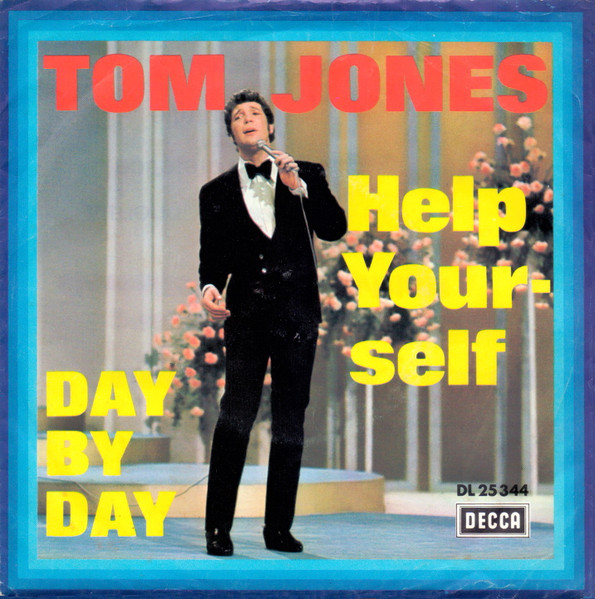
One of TJ's most famous and biggest of hits - even though it was never placed above number 5, it remained on our charts for half a year - a rather cheesy Italian singalong (with, inevitably, English lyrics by Jack Fishman) which the great man does his best to believe ("EEEEYEEEEHAH!" he unconvincingly exclaims, sounding more like Jeremy Paxman than anyone else, over the first instrumental break).
6. DUSTY SPRINGFIELD: I Close My Eyes And Count To Ten

When writer Clive Westlake played this song to Dusty she begged and pleaded with him not to give it to anybody else. So this is a song in which she palpably believed - you can tell by what is by any standards an extremely involved vocal performance - and that belief must have been infectious because it became her biggest hit in two years, with John Franz' arrangement - answering her "the music that's flooding my mind" with sudden descents of strings, floating from left to right like champagne erupting from a volcano.
5. HERB ALPERT: This Guy's In Love With You

Rumour has it that Bacharach and David had Chet Baker in mind when they wrote this song, but since Baker was in no condition to record it in 1968 they asked Herb. Initially bemused by their request - hey, I'm a trumpet player, not a singer! - he nevertheless made an excellent job of "not singing" the song in such an apparently throwaway manner that you overlook the fact that his voice has to negotiate some two-and-a-half octaves. Bacharach's arrangement is push-pull unimpeachable, with the world rising to its climax before Herb stops it dead with his trembling "if not, I'll just die" (RAYE pulls off the same achievement with her last line of "Nightingale Lane"). Sublime, and in the USA it kept "MacArthur Park" at number two. Hope cautiously triumphing over anticipated despair.
4. SIMON & GARFUNKEL: Mrs Robinson

Fitting to see this here, as Dustin Hoffman's birthday was yesterday; however, this doesn't really seem to have much to do with Anne Bancroft's character or the movie as a whole. Instead it reads more like a vaguely sinister to-do list of instructions for elderly inhabitants of The Village with some very subtle damn-you-America nods. All sung to a jolly acoustic jaunt which would have passed muster on any Monkees album (that's a compliment, by the way).
3. DES O'CONNOR: I Pretend

Ah, the great Des, sticking out like a sore Green Shield stamp book amongst this company with a very old-fashioned-sounding parlour ballad about abandoned love (composed by Barry Mason and Les Reed, who could, and did, turn this kind of stuff out by the yard). Even the man himself remained mystified by its huge success - it went all the way to number one and stayed on the charts for nine full months ("Was it pregnant?" he once remarked to Gloria Hunniford) - and thought his own singing on it was atrocious. Yet the song appealed directly to what Lena calls "the Housewives of Valium Court"; Britain's own silent conservative majority who missed out on the beat boom, or got off the bus when it became too weird for them, and had little left save well-mannered and better-concealed despair.
2. THE CRAZY WORLD OF ARTHUR BROWN: Fire!

This record scared the bejesus out of four-year-old me. On Top Of The Pops I thought the band was actually burning to death (although it was actually a promo film, since for health and safety reasons they couldn't do that in a television studio). The abrupt "I AM THE GOD OF HELLFIRE" shriek in the record's intro dislocated my brain (see the jukebox of the Vale Café in Parkhead, where this rudely interrupted "Hey Jude"; my mother wasn't too thrilled by the juxtaposition either). But I now see that this song is getting ready for the seventies, with all its proto-Ian Gillan shrieking and Hammer horror Hammond organ, and how in 1968 it might have sounded like revolution...
1. TOMMY JAMES & THE SHONDELLS: Mony Mony
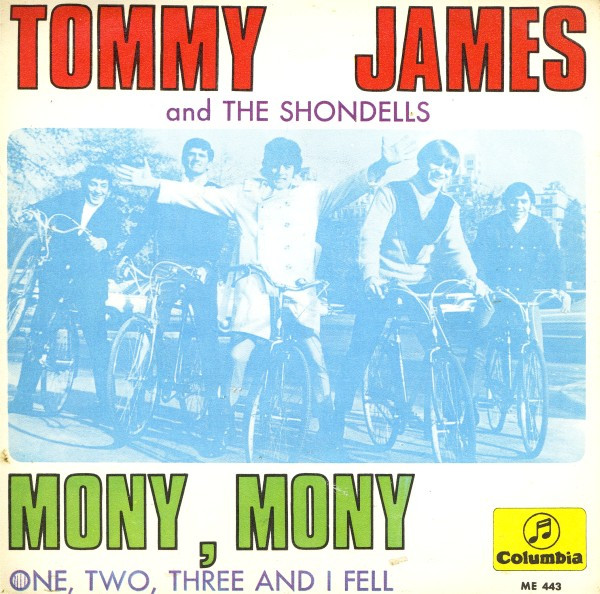
...As might have this. One of America's biggest groups of the late sixties, they only had one really big hit here but it went all the way. Complete frat-rock clap-along singalong - Tommy James apparently persuaded everybody working in the building to come up and sing along to this song inspired by an insurance company sign he saw in the street outside the studio, and in its way this is akin to The Kids walking all over old Nixonian people's ideas of "society" - as a DJ I once segued this out of the R&B riffing that climaxes Peter Brötzmann's Machine Gun, also recorded in 1968, and it made perfect sense. What a great chart this was, so much so that similarly going through the one from 1974 would serve only as an anti-climax; for my contemporary thoughts on the matter, see my Young Punctum blog.


No comments:
Post a Comment